

Alternatives to Ember
Ember delivers daily AI-generated market calls with public scores and locked predictions, revealing high-conviction signals when its probabilities.
20 alternatives found


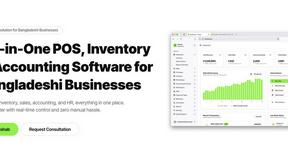
Hishab
All-in-one POS, inventory, accounting and HR software for Bangladeshi SMEs — real-time sales, stock and finance in one place.
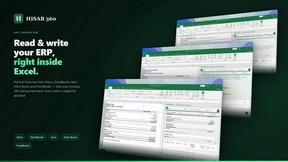

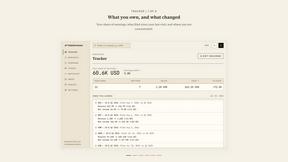

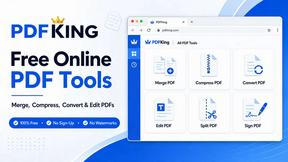
PDFKing
PDFKing is a free online PDF toolkit designed to make everyday document tasks simple, fast, and accessible. It brings essential PDF tools together in

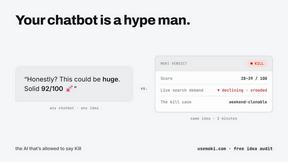
moki - startup idea validation. you need
moki scores startup ideas as Make, Hold, or Kill by analyzing fatal flaws and market demand before you waste three months.
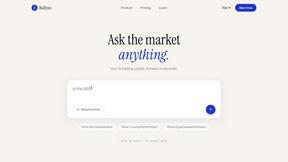
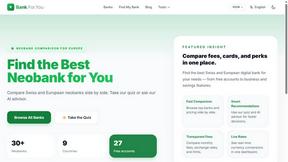
Bank.For.You
Compare Swiss and European neobanks side by side using a quick quiz or AI advisor to find your ideal digital bank.

iPulse
iPulse delivers AI-driven market intelligence with real-time forecasts, signals, and risk insights across global assets.
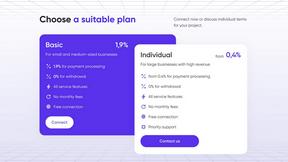
TryBit
TryBit is a crypto payment gateway that lets merchants accept over 40 cryptocurrencies online with low fees and automatic volatility protection.

helpdol
Helpdol is an AI-powered finance tool that lets you track expenses, forecast cash flow, and manage receipts using voice commands.

Postservice.at
Postservice.at provides a legal Vienna address and virtual office from 49 euros monthly, activated in minutes for business registration and mail.
About Ember Alternatives
Ember operates within the business and finance category as a specialized AI prediction engine that provides daily market calls on live Polymarket events. Unlike many opaque forecasting tools, Ember distinguishes itself by publishing every prediction in real-time with public accuracy scores, using three distinct AI models that operate independently and flag high-conviction signals when they diverge from the crowd by ten or more points. Users commonly seek alternatives to Ember for reasons such as wanting a different market focus, needing integration with their existing portfolio management tools, or requiring lower pricing tiers for casual use. When evaluating an alternative, look for transparency in methodology, verifiable track records with timestamped predictions, clear calibration metrics like Brier scores, and a commitment to publishing both successes and failures without post-hoc editing. The primary criteria for choosing a replacement should center on trust and accountability in the prediction process. A strong alternative will offer independent model verification, public performance logs that cannot be altered after the fact, and a consistent daily schedule that allows you to act on signals before market resolution. Additionally, consider whether the platform provides post-mortems on incorrect calls, as this demonstrates a commitment to learning and improvement. Finally, assess the breadth of markets covered and the frequency of signals to ensure the tool aligns with your specific trading or research needs, as some platforms may specialize in niche sectors while others offer broader coverage across multiple prediction markets.
FAQs about Ember Alternatives
What is Ember?
Ember is a public AI prediction engine that delivers daily market calls on live Polymarket events. Every morning at 7AM EST, three independent AI models from Claude, Grok, and Gemini each make their own predictions without consulting each other. The platform is built on the principle that an AI which refuses to show its work is not trustworthy, so all calls are timestamped before outcomes and accuracy is tracked using Brier scores.
Who is Ember for?
Ember is designed for traders, analysts, and market enthusiasts who want data-driven signals for prediction markets like Polymarket. It appeals to users who value transparency and are willing to evaluate AI predictions based on public, uneditable track records. The service is particularly useful for individuals or teams seeking high-conviction signals when AI models disagree with the crowd by at least ten points.
What are the main features of Ember?
Ember's core features include daily independent predictions from three different AI models, high-conviction signals flagged when models diverge from the crowd by ten or more points, and public Brier score accuracy tracking that rewards both confidence and correctness. Every call is timestamped before the market resolves, and all predictions remain unedited after the fact with post-mortems provided for wrong calls.
Why choose Ember over other prediction tools?
Ember distinguishes itself through radical transparency, publishing every prediction and its accuracy score publicly with no edits allowed after the fact. The use of three genuinely independent AI models provides a diversity of perspective that reduces single-model bias, and the Brier score calibration ensures that both accuracy and confidence are measured. Additionally, the daily 7AM EST schedule and 365-day tracking period give users a consistent, long-term record to evaluate performance.