RecordFlow
RecordFlow automatically saves Zoom cloud recordings to Google Drive and can delete them from Zoom to free storage.
Visit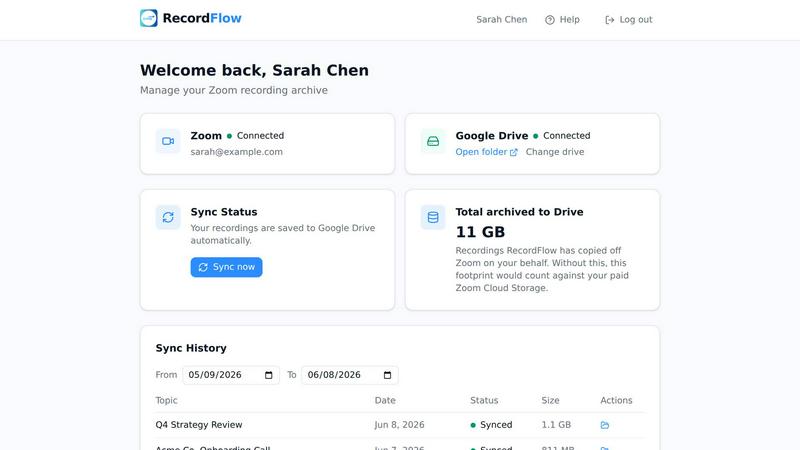
About RecordFlow
RecordFlow is a specialized automation tool designed to eliminate the manual, time-consuming process of transferring Zoom cloud recordings to Google Drive. The product automatically archives every Zoom cloud recording to a user's designated Google Drive folder the moment a meeting ends, and it can backfill recordings from the past two years. This solves a critical pain point for professionals who rely on Zoom recordings as deliverables, records, or compliance documentation but are constrained by Zoom's limited cloud storage. Zoom's Pro plan offers only 5 GB of storage, which equates to roughly five hours of recordings. Once that limit is reached, new recordings are blocked entirely. RecordFlow removes this bottleneck by providing an automatic, reliable, and secure pipeline from Zoom to Google Drive. The product is built for coaches, consultants, therapists, professors, and small teams who cannot afford to lose a recording. Setup takes approximately 60 seconds: users sign in with Zoom, connect their Google Drive, and pick a destination folder. After that, new recordings sync automatically and forever. RecordFlow transfers every file Zoom produces, including video (MP4), audio (M4A), transcripts (VTT and a formatted Google Doc), and chat logs. All files are organized by year and date. The service features an optional auto-delete function that clears recordings from Zoom on a safe delay once the Drive copy is verified, automatically freeing up storage. The product is designed with reliability in mind, using chunked transfers for large files, smart deduplication to safely re-run syncing, and automatic retries. Recordings stream directly to Google Drive without being stored on RecordFlow's servers. The service uses OAuth 2.0 for authentication and AES-256 encryption for data security. RecordFlow is available on both the Zoom App Marketplace and Google Workspace Marketplace, having passed security reviews for both platforms.
Features of RecordFlow
Automatic Sync and Backfill
RecordFlow automatically transfers every new Zoom cloud recording to Google Drive within minutes of the meeting ending. This eliminates the need for manual downloads and uploads. Beyond new recordings, the service can backfill and archive recordings from the past two years. This means that users who have been accumulating recordings in Zoom's limited storage can move their entire history to Google Drive in one automated process. The sync runs continuously and requires no user intervention after the initial 60-second setup. Users receive an email notification with a direct link when each recording is ready in Google Drive.
Comprehensive File Transfer and Organization
RecordFlow transfers every file that Zoom produces for a cloud recording. This includes the video file in MP4 format, the audio-only file in M4A format, the transcript in VTT format, and the chat log. Additionally, RecordFlow creates a formatted Google Doc version of the transcript, making it searchable and editable within Google Drive. All files are automatically organized into a folder structure by year and date, ensuring that recordings are easy to find and manage. For early access users, RecordFlow can also archive AI Companion transcripts and meeting summaries as Google Docs and Markdown files.
Reliable Large File Handling and Deduplication
RecordFlow is engineered for reliability with chunked transfers that never choke on large files, such as hour-long meetings. This ensures that even the biggest recordings transfer completely without timeouts or failed uploads. The service also features smart deduplication, which makes it safe to re-run the sync process without creating duplicate copies of files in Google Drive. Automatic retries handle any temporary network issues, ensuring that no recording is lost due to a transient error. An hourly safety net further ensures that any missed recordings are caught and transferred.
Secure Architecture and Auto-Delete from Zoom
Security is a core design principle for RecordFlow. Users sign in with their existing Zoom and Google accounts using OAuth 2.0, so RecordFlow never sees or stores passwords. All data is encrypted in transit and at rest using AES-256 encryption. Crucially, recordings stream directly from Zoom to Google Drive without being stored on RecordFlow's servers. The service uses minimal Google Drive permissions, only accessing files it creates. For storage management, RecordFlow offers an optional auto-delete feature. Once a recording is safely verified in Google Drive, RecordFlow can delete it from Zoom on a configurable delay, automatically freeing up Zoom storage space.
Use Cases of RecordFlow
Coaches and Consultants Archiving Client Sessions
Coaches and consultants often record multiple client sessions each week. Zoom's 5 GB storage limit fills up in days, forcing them to manually download, upload to Drive, and organize files. RecordFlow automates this entire workflow. Every client session recording, along with its transcript and chat log, is automatically saved to a Google Drive folder. This ensures that recordings are always available as client deliverables and that no session is ever lost due to Zoom's storage cap. The organized folder structure by date makes it easy to retrieve specific sessions for review or sharing.
Education Teams Preserving Lecture Content
Professors and education teams record lectures for students who cannot attend live or for review purposes. These recordings need a permanent home that students can access reliably. RecordFlow automatically transfers lecture recordings from Zoom to Google Drive, which can be a shared Drive accessible to an entire class. The automatic creation of Google Doc transcripts makes lectures searchable and accessible for students with different learning needs. This removes the dependency on Zoom's limited storage and ensures that educational content is preserved for the entire semester or academic year.
Business Teams Managing Team Recordings
Business teams that record all-hands meetings, product demos, training sessions, and client calls need a centralized, organized archive. RecordFlow can be installed as a Zoom admin, allowing IT or operations administrators to opt in team members. Every selected member's recordings then land in one root Google Drive folder, with sub-folders created automatically for each member. This provides a single source of truth for all team recordings. The auto-delete feature helps manage Zoom storage costs across the entire account, freeing up space without manual intervention.
IT and Operations Admins Ensuring Compliance
IT and operations administrators are responsible for the entire Zoom account and need to ensure recordings are backed up and compliant with data retention policies. RecordFlow allows an admin to install the service once and manage archiving for all opted-in members. The admin can point the archive to a single root folder, and member sub-folders are created automatically. This provides centralized control over where recordings are stored and how long they remain in Zoom. The secure architecture, with OAuth 2.0 and AES-256 encryption, ensures that sensitive meeting content is protected throughout the transfer and storage process.
Frequently Asked Questions
How long does the initial setup take and what do I need?
The initial setup takes approximately 60 seconds. You need a Zoom account with a paid plan (Pro, Business, or Enterprise) and a Google Drive account (personal or Google Workspace). During setup, you sign in with Zoom, connect your Google Drive, and select a destination folder. No credit card is required to start, and there is a free tier available.
Does RecordFlow store my recordings on its servers?
No, RecordFlow never stores your recordings on its servers. Recordings stream directly from Zoom to your Google Drive. RecordFlow only facilitates the transfer and manages the metadata required to organize and track files. This design ensures that your data remains in your control and is not exposed to additional third-party storage.
What happens if a recording is very large, like an hour-long meeting?
RecordFlow is designed to handle large files reliably. It uses chunked transfers that break large files into smaller pieces for upload, preventing timeouts and failed uploads. The service also includes automatic retries and an hourly safety net to ensure that even very long meetings are transferred completely and without interruption.
Can RecordFlow delete recordings from Zoom to free up storage?
Yes, RecordFlow offers an optional auto-delete feature. Once a recording is safely verified and stored in your Google Drive, RecordFlow can automatically delete it from Zoom on a configurable delay. This frees up your Zoom cloud storage without any manual work. The feature is safe by design, as it only deletes the Zoom copy after the Drive copy is confirmed to be complete and intact.
Explore more in this category:
Similar to RecordFlow
tallycounterweb.com
Tally Counter is a simple online counting tool for tracking attendance, workouts, inventory, sports scores, visitors, and everyday activities.

iHatePosting
Create once, tailor for each platform, and schedule posts across 14 social networks from one simple dashboard.
PDFWix
PDFWix is a free online PDF toolkit designed to make everyday PDF tasks simple, fast, and private.
PDFKing
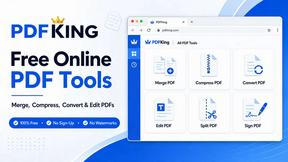
PDFKing is a free online PDF toolkit designed to make everyday document tasks simple, fast, and accessible. It brings essential PDF tools together in
Video2URL
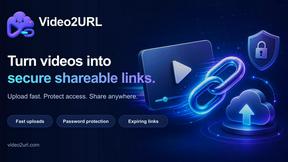
Turn videos, images, PDFs, and files into shareable links with fast uploads and privacy-friendly controls.